What forest silence feels like
Forest silence isn't quiet. It's a layered, attentive thing — a sound you only really notice when something breaks it.
City silence is a flat, even thing. Forest silence isn't.
Forest silence is full of small layered noises — a beetle in dry leaves, the wind moving through a different stratum of trees than the one near your face, a bulbul somewhere up the slope, the engine of your jeep ticking as it cools. It feels quiet because nothing is loud, but if you sit still long enough you realise the forest is making a soft constant hum and you're listening to it without meaning to.
When it changes
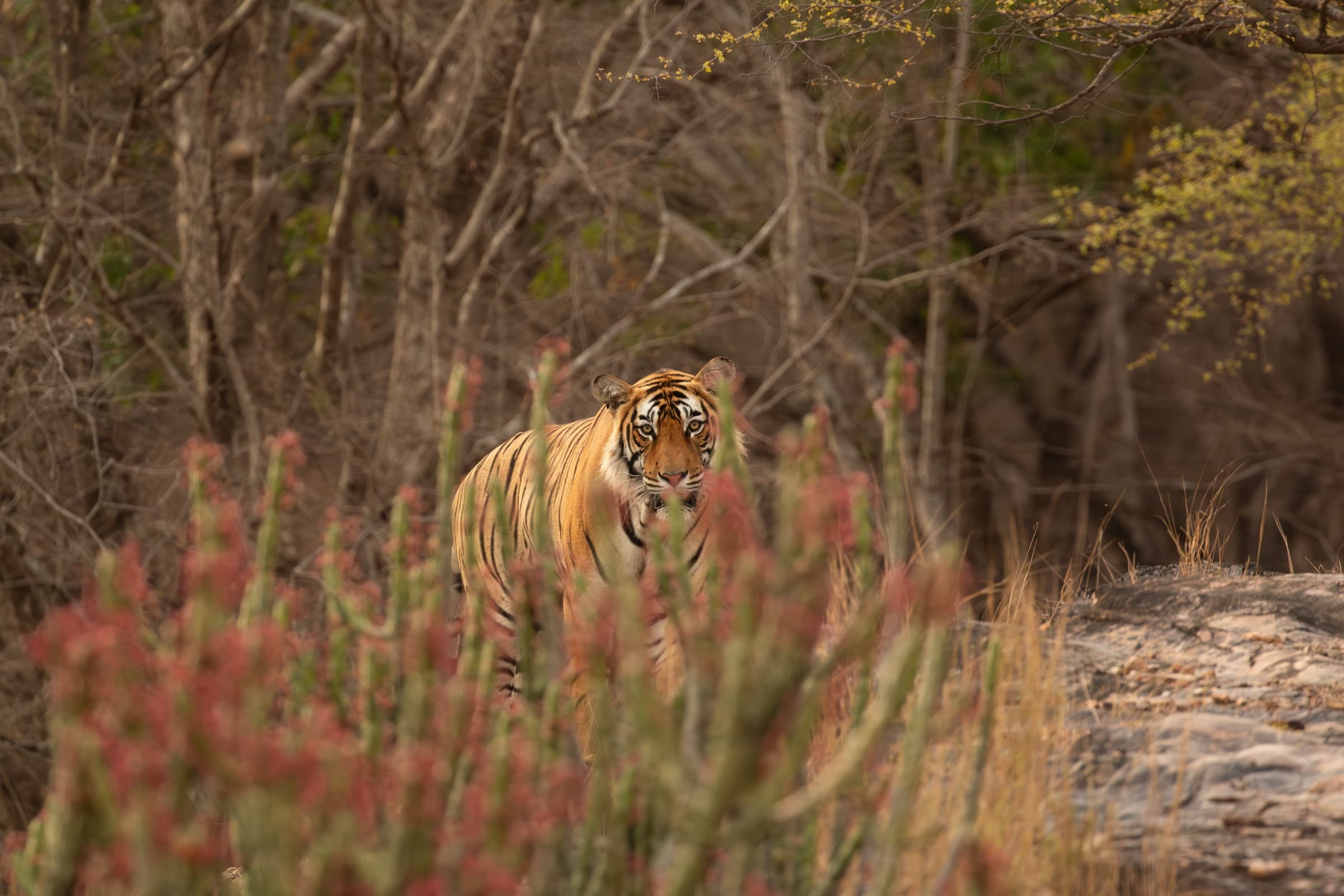
The forest changes its sound a few minutes before something happens. The bulbul stops. The langurs go up. A peacock calls once and then doesn't call again. The jeep stops ticking because you've all stopped breathing.
That gap — between the forest noise softening and the actual sighting — is where most of wildlife photography happens. You're listening more than you're looking. By the time the tiger steps into the road, half the photograph has already happened in your head.
Why I bring this up
A lot of photography advice is technical — about exposure, about light, about lens choices. But the thing that's actually changed my work is learning to hear the forest the way it wants to be heard. The frame, when it comes, comes out of the silence I sat in.